
Blog
Ipamorelin peptide for sale: your 2026 research sourcing guide

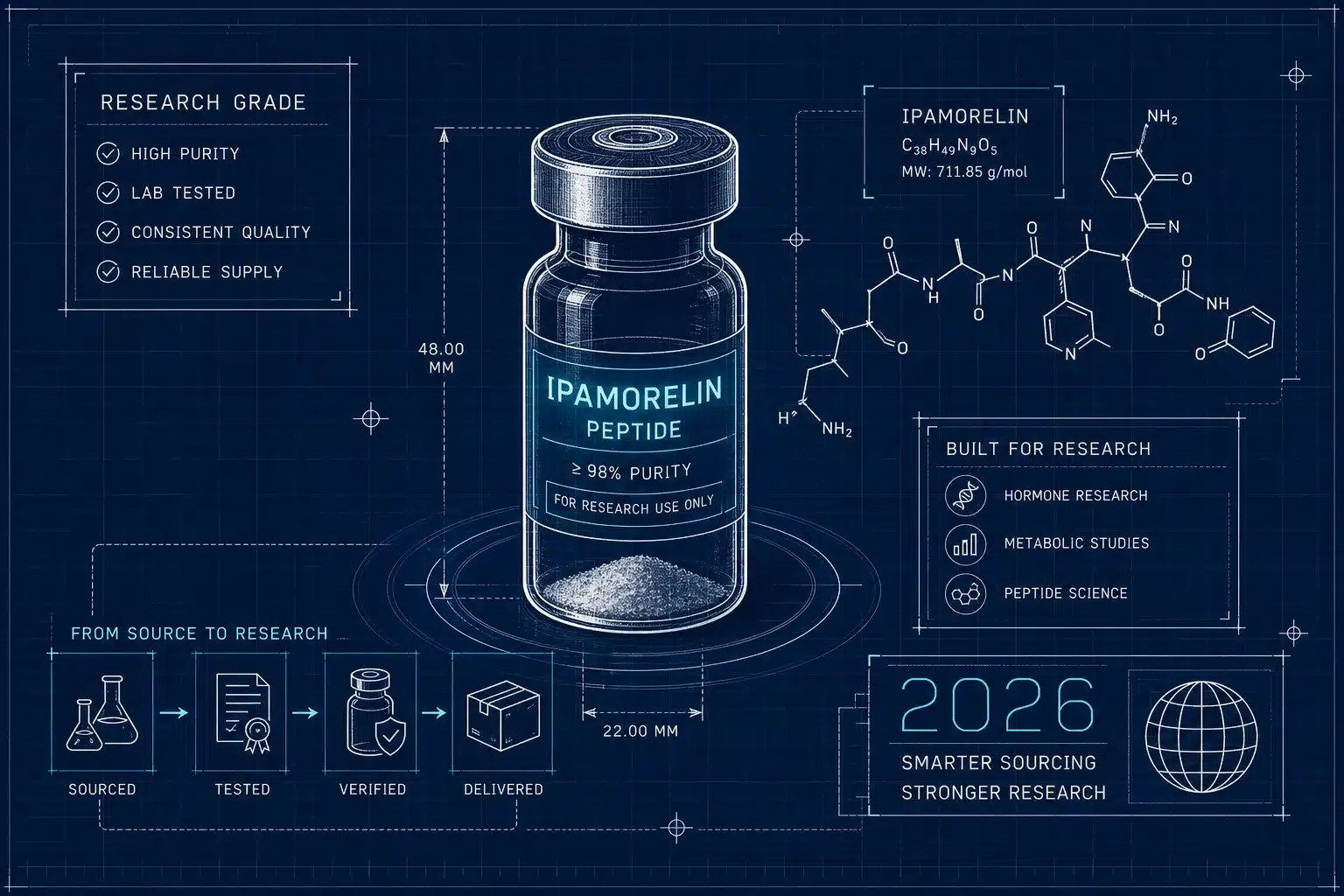
The grey market for ipamorelin peptide for sale is genuinely crowded right now. A single 10mg vial can cost anywhere from roughly $30 to over $90 depending on which supplier you land on, and from the outside, there’s no straightforward way to determine whether the cheaper option is a steal or a liability, not without knowing whether that price difference reflects documentation quality or just a vendor cutting analytical corners. That pricing gap isn’t explained by brand prestige or marketing budgets alone. It often comes down to whether the vendor actually ran the compound through rigorous analytical testing, or simply printed a purity number on a label and called it a day.
For researchers who need consistent, reproducible results, that distinction matters more than the sticker price. R-Peptide Supply (Grey Peptide Shop) is one supplier worth evaluating in this space, offering Ipamorelin vials with Certificates of Analysis at a competitive price point. That combination, COA-backed documentation at a low per-mg cost, isn’t universal across grey market vendors, which makes it worth understanding before any sourcing decision.
This guide works through the full sourcing framework: what research-grade purity actually requires, how to read a COA before placing an order, how to think about pricing in per-mg terms, what the U.S. legal posture looks like, and why R-Peptide Supply’s offering holds up under scrutiny. Use each section as a filter before you commit to any vendor.
What “research grade” actually means for Ipamorelin purity
Most suppliers claim 99%+ purity. Far fewer can back that claim with real analytical data. Understanding what that number requires helps you separate marketing language from documented quality.
The 99%+ purity benchmark and why that threshold matters
The 99%+ figure isn’t a marketing grade; it’s an analytical result generated by HPLC or UPLC area normalization. The method measures how much of the total chromatographic area belongs to the primary compound versus everything else present in the sample. When purity drops below this threshold, truncation products and related impurities become a measurable variable in your data, which can skew results in ways that are hard to diagnose after the fact. Lyophilized, no-DAC Ipamorelin is the standard research format because the freeze-dried structure maintains stability at room temperature for shorter transit periods, and the no-DAC designation refers to the absence of a drug affinity complex modification, a structural characteristic relevant to how the compound behaves in solution during research protocols.
HPLC and mass spectrometry: what each test actually confirms
HPLC and mass spectrometry answer two different questions, and you need both. HPLC tells you what percentage of the sample is the dominant component by measuring chromatographic peak areas. What it doesn’t confirm is whether that dominant component is actually Ipamorelin. Mass spectrometry handles identity confirmation by matching the sample against expected molecular weight and fragment ion patterns. For authentic Ipamorelin, the diagnostic fragment ions appear at m/z 129.1022, 223.1191, and 420.2041, with mass error under 5 ppm. A COA that shows only an HPLC chromatogram without MS confirmation leaves the identity question open, a meaningful gap in research-grade documentation.
For additional technical background on analytical detection of growth hormone, releasing peptides, consult the rapid detection of growth hormone-releasing peptides in DBS technical note.
Why a purity claim without a chromatogram is a red flag
A percentage without an attached chromatogram is an unverifiable number. A credible single-peak chromatogram shows one dominant peak at the expected retention time with negligible secondary peaks to the left and right. Multiple secondary peaks signal incomplete synthesis, degradation products, or contamination from related peptides. When a vendor’s COA states “99% purity” in plain text with no method conditions and no visual data, you have no way to determine what analytical method was used, when the analysis was performed, or whether the number applies to the specific batch you’re receiving.
How to read an Ipamorelin COA before you place an order
A COA is only useful if you know what to look for. Reading COAs critically before purchasing is one of the most reliable ways to avoid sourcing mistakes that waste budget and compromise data integrity.
For a practical example of sourcing a peptide with batch-specific COA verification, see How to Source BPC-157 with a Verified Certificate of Analysis, Research Peptides Supply.
The five elements every legitimate Ipamorelin COA must include
A legitimate COA for Ipamorelin should include five core elements: product name and sequence confirmation, a batch or lot number, the date of analysis, the analytical method used for purity testing, and an analyst or QA sign-off. The lot number is especially important because it ties the test results to a specific production batch, the only way to verify that the COA you’re reading actually applies to the vials you’re receiving. A COA without a lot number is a generic document, not a batch-specific quality record. It tells you nothing about the compound in the vial sitting in front of you.
How to interpret the chromatogram and mass spectrum
Examine the chromatogram first: you want one dominant peak at the correct retention time with minimal secondary peaks. Small minor peaks at low area percentages are generally acceptable, but large secondary peaks indicate problems with synthesis purity or sample degradation. Then check the MS section for a parent ion that matches Ipamorelin’s expected molecular weight of 711.86 Da. Together, these two data points confirm both identity and purity, the complete picture. Either one alone is incomplete evidence.
Common COA red flags that signal sourcing risk
Several warning signs should stop a purchase decision before checkout. Watch for undated documents, no method conditions listed alongside the purity percentage, a “99% pure” claim with no supporting chromatogram, no mass spectrometry confirmation, and generic peptide language that doesn’t reference Ipamorelin specifically. The absence of manufacturer traceability information is another serious flag. If the COA doesn’t identify who ran the test, when they ran it, and on which production batch, it functions as decoration rather than documentation.
Ipamorelin peptide for sale: vial sizes, pricing tiers, and cost per mg
The headline price on a vial is the least useful number for comparing suppliers. Price-per-mg is the metric that matters, and it shifts significantly depending on vial size, volume discounts, and shipping thresholds.
5mg vs. 10mg vials: which format fits your research volume
A 5mg vial carries a lower upfront cost but a higher per-mg rate. For researchers running a single short protocol, that trade-off may be acceptable. For labs running sustained protocols or resellers building inventory, the 10mg format is the more economical choice because the per-mg cost drops substantially and lyophilized Ipamorelin in sealed vials maintains stability well through repeated handling. Pre-reconstituted formats don’t offer the same shelf stability, so the 10mg lyophilized vial is the default recommendation for any research application requiring consistency across multiple sessions.
Breaking down price-per-mg across the current supplier landscape
Across U.S.-based suppliers currently stocking Ipamorelin 10mg vials, list prices generally range from roughly $30 to $90, putting the effective per-mg cost somewhere between approximately $3.00 and $9.00 depending on where you buy ipamorelin. Based on available vendor listings, some suppliers priced in the mid-range, between $55 and $80, do not appear to consistently provide the COA documentation that would justify a premium over lower-cost, fully documented options. A COA-backed vial at the lower end of that range doesn’t just represent budget savings; it represents better value per unit of verified quality. That’s the procurement logic worth applying.
For a broader context on categories, COAs, and pricing across research peptides, consult Research peptides for sale: categories, COAs, and pricing, Research Peptides Supply.
Use a simple price-per-mg calculator to run quick landed-cost comparisons when factoring shipping thresholds and discounts into your procurement math.
When multi-vial bundles and wholesale tiers change the math
The per-mg calculation shifts again when you factor in volume discounts and shipping thresholds. For labs placing multi-vial orders, free shipping thresholds, where available, reduce the all-in cost per vial meaningfully. R-Peptide Supply offers wholesale-tier pricing structures worth reviewing directly on their storefront, particularly for labs running recurring protocols or resellers stocking inventory across multiple compounds. The correct comparison isn’t list price against list price. It’s total landed cost, including freight, after discount thresholds are applied.
U.S. legal framework and shipping realities for research peptides
The legal posture around research-use-only peptides is specific, and understanding it before ordering protects both the researcher and the procurement decision.
What “research use only” covers and where the line is drawn
RUO labeling positions Ipamorelin as a compound sold for legitimate scientific research, not for human consumption or therapeutic application. The label itself doesn’t override FDA scrutiny if the surrounding marketing makes health claims, implies human use, or facilitates injection by consumers. The FDA evaluates intended use based on labeling, advertising, packaging, and the overall context of the sale, not just the disclaimer text. Ipamorelin has also been subject to FDA compounding restrictions, which limits availability through regulated compounding channels and explains much of why the grey market exists for this compound. Buying for genuine research purposes remains the legally defensible posture, and sourcing from vendors who frame their offerings consistently with RUO compliance reduces exposure.
For a plain-language breakdown of how RUO and related policies create a legal gray area, see Research-use-only peptides: legal gray area explained. For a jurisdictional overview, review peptide laws in the United States.
Shipping complications and how reputable vendors mitigate them
Domestic U.S. delivery of lyophilized peptides faces a predictable set of complications: carrier holds from incomplete documentation, moisture ingress from poor packaging, and extended transit delays that expose vials to heat. Responsible vendors address these directly with complete customs-style documentation that includes RUO declarations and accurate product descriptions. Validated packaging designed for stability across standard transit times is equally important. For sealed lyophilized material, the primary risk isn’t strict cold-chain failure but rather prolonged heat exposure combined with poor insulation. Confirm whether free shipping thresholds apply to your order before comparing final checkout totals across vendors, since freight costs can shift the per-mg calculation meaningfully.
For additional practical considerations when importing peptides, including documentation and origin concerns, see this guide on importing research peptides from China to the US.
Why R-Peptide Supply’s Ipamorelin is worth evaluating for your protocol
Measured against the criteria covered in this guide, R-Peptide Supply is a practical starting point for Ipamorelin sourcing. The evaluation breaks down across quality documentation, logistics, and catalog depth.
Ipamorelin peptide for sale with lab-tested documentation: what to verify at R-Peptide Supply
R-Peptide Supply positions its Ipamorelin vials at the lower end of the current market range with COA documentation included. Verify directly on their product pages that the COA covers batch-specific traceability, HPLC purity data, and MS identity confirmation, the complete set of evidence a researcher needs to evaluate the compound before use. At a competitive price point with that level of documentation, the cost-per-mg becomes defensible from a research procurement standpoint. A low price without a COA is a liability. A low price with complete, batch-specific documentation is a genuine sourcing advantage.
Ordering workflow, shipping threshold, and support structure
The practical logistics at R-Peptide Supply are worth reviewing directly on their storefront. Check current thresholds for free shipping eligibility, which matters for labs placing multi-vial orders or resellers stocking Ipamorelin alongside other compounds. For labs running recurring research protocols, consistency in the ordering workflow, predictable pricing, accessible documentation, and straightforward checkout, reduces friction in multi-compound procurement planning.
The CJC-1295/Ipamorelin blend option and ancillary supplies
R-Peptide Supply’s catalog includes options for researchers running combined growth hormone secretagogue protocols, verify current availability of CJC-1295/Ipamorelin blend and ancillary reconstitution supplies directly on their storefront. Consolidating compound and reconstitution supply procurement under one vendor reduces order management complexity and keeps the all-in cost calculation cleaner.
Your sourcing checklist before the next order
The sourcing decision for Ipamorelin comes down to a short, repeatable checklist. Apply it to every vendor before committing to a purchase:
- Purity documentation: Confirm 99%+ purity backed by an HPLC chromatogram and mass spectrometry identity confirmation, not just a stated percentage.
- COA completeness: Read the COA using the five-element framework (product name, lot number, analysis date, method, analyst sign-off). Treat any missing element as a disqualifying flag, not a minor inconvenience.
- Price-per-mg calculation: Use all-in cost after shipping thresholds, not the headline vial price, to make a valid cross-vendor comparison.
- RUO framing: Confirm the vendor’s labeling and marketing stay within research-use-only language and don’t cross into health claim territory.
- Packaging and documentation: Verify that packaging and accompanying documentation meet domestic shipping standards for lyophilized peptides.
Ipamorelin options on the grey market vary more in quality than they do in price, and the COA is the single most reliable filter for separating credible suppliers from vendors who are counting on buyers not asking hard questions. The chromatogram either shows a clean single peak or it doesn’t. The mass spectrum either confirms identity or it doesn’t. That binary makes the evaluation straightforward once you know what to look for.
When evaluating ipamorelin peptide for sale from any vendor, run every option through this checklist before checkout. R-Peptide Supply (Grey Peptide Shop) is a practical starting point: review the current COA documentation and product listings on their storefront to verify that pricing, batch traceability, and analytical data meet the benchmarks covered in this guide before placing your first order. For a broader procurement perspective and an in-depth buyer’s checklist, consult Research peptides for sale online: the complete buyer’s guide, Research Peptides Supply.